
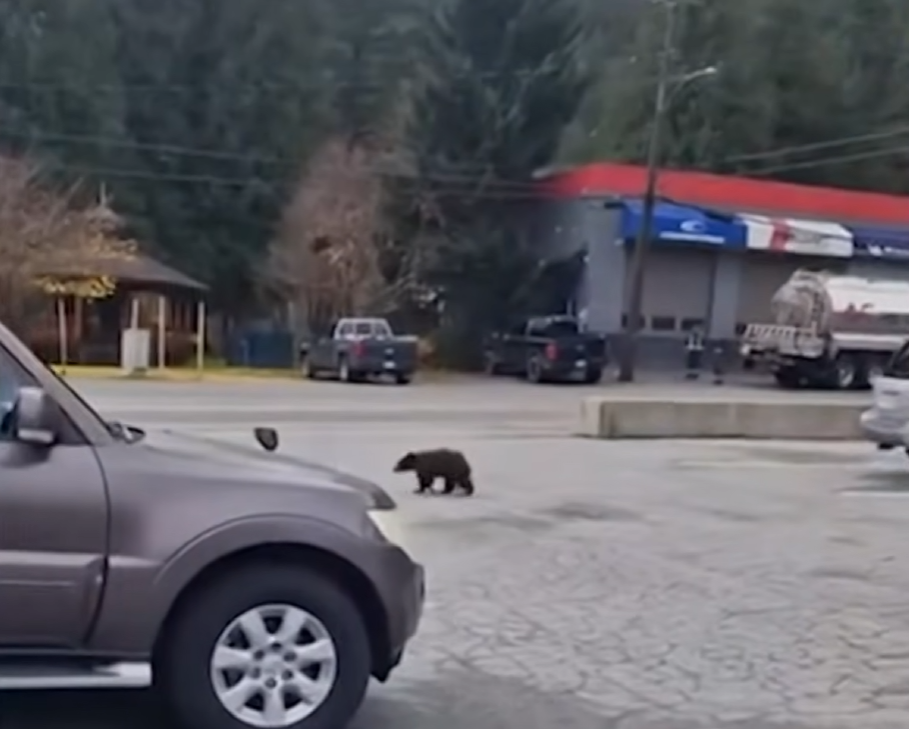
“They’re adorable little bear cubs, and you want them to have a shot at life,” said Chauvin, speaking with CTV News on Saturday. “That one spent almost an evening on our porch trying to find shelter.”
An orphaned bear cub seeking shelter looks into the window of Britannia Beach resident David Chauvin's home. After calling B.C.’s Report All Poachers and Polluters (RAPP) line, they reached out to a provincial government ministry. After days without hearing back, the couple and their neighbours decided it was time to call on the folks who capture, care for, and rehabilitate these creatures.
Still, Critter Care Wildlife Society, which specializes in black bear cubs, is restricted in this case, as they are with others in the region—like Sput, the bear cub wandering alone in Pemberton who drew so much attention online last week. Sput has drawn a lot of attention of people calling him Spud with a D instead of a T, due to a mishearing in a interview.
Related: Pemberton, B.C., residents plead with province to allow rescue of orphaned black bear cub “Our permissible bear capacity is not being increased by the Ministry of Water, Land, and Resource Stewardship even though we have ample space and the resources to care for orphaned cubs. There are over 10 cubs in our region who are being denied rescue, some injured and suffering. Others have become victims of vehicle strikes,” the organization explained in a social media post on Nov. 23.
“Our hands are tied. We cannot act without governmental authorization.”
Two days later, the B.C. Conservation Officer Service shared a statement from the Ministry of Water, Land, and Resource Stewardship, addressing the community’s concerns. The ministry explained that the decision not to intervene, or allow another organization to intervene, is based on a variety of factors.
“Generally, cubs that are older than eight months of age have the basic ability to forage and den independently. Available literature documents survival of orphaned and rehabilitated cubs, including releases before one year of age. This approach offers the cub the best chance of long-term survival,” the statement reads, in part.
“As difficult as it can be to watch from a distance, giving the cub the opportunity to remain wild will give the bear the best chance at survival.”
Asked how he felt about this stance taken by the BCCOS, Chauvin said he understood the idea of letting nature run its course, but his mind still went to these cubs landing in a facility that specializes in their rehabilitation.
“They have the resources, they have the space,” he said. “Why not leverage their expertise to save an animal’s life? And that’s really what it comes down to.”
Information on the provincial government’s website stresses the importance of keeping bears wild, explaining that it offers them their best chance at recovery. For the second cub on the Chauvins’ radar, that course of action isn’t right either, as they’re hearing from others in Britannia Beach watching it limp on what they believe is a broken leg.
Chauvin said he understands that getting conservation officers involved doesn’t always result in a happy ending for the bear, as sometimes the BCCOS deems it best that a bear is killed. The Chauvins opened a case with conservation officers regardless, but were told that officers wouldn’t come to assess the cubs if they don’t yet present any danger to humans.
“If there’s no threat to humans or to human activity, if the bear is not encroaching on humans or on homes too much, they can’t do anything. They’re waiting for guidance from the ministry,” he said.
“The best-case scenario is at least knowing that the situation was properly assessed by a wildlife expert.”